what to put in a car first aid kit
Editor'southward Note: This is a invitee article by Marine Corps veteran and paramedic Charles Patterson.
If yous've been reading articles from the Fine art of Manliness for any length of time, information technology's likely that yous've stumbled upon at to the lowest degree 1 article that has referenced the demand for a beginning aid kit. Whether it was the Altoids tin commencement assistance kit, keeping a first aid kit in your motorcar, or a list of backpacking items, information technology has long been established that a get-go aid kit is an essential piece of gear for at home and on the become. There are a multitude of pre-congenital kickoff aid kits on the market place, available everywhere from your local pharmacy to Amazon, and ranging from a few bucks for no more than a pack of various Band-Aids and antibiotic ointments to several-hundred-dollar loftier-stop specialized kits for the survivalist, tactical, and professional first responder markets.
While you may be able to find 1 of these pre-made kits that conform your needs, they present their ain set of bug including, but certainly not limited to, depression quality products, unnecessary items, and a lack of (or poor) organization that makes finding what you need when you need it cumbersome at best.
Sometimes, you only take to do information technology yourself. As a paramedic, husband, and father of v beautiful children, I accept tried several off-the-shelf starting time aid kits and found none that fit the beak. If you find yourself in this predicament, I've put together this comprehensive guide to help you create a practical showtime aid kit of your own that fits your individual needs. In this guide we'll cover a few topics to assist you narrow down the needs of your offset aid kit, items I recommend keeping in whatever kit, the kits that I've made equally a reference, and the importance of training and then that you actually know how to use your supplies.
General Considerations for Your First Aid Kit
The beginning step in building your own kit is to think about what or who you lot're using this kit for. A first aid kit for a unmarried man in the city to take on trips to the gun range will exist very unlike than what a family of half dozen living in the country keeps for bug around the house.
Perform a Adventure Analysis
For many people, it can be difficult to consider all the possibilities that you need to be prepared for. So, earlier you begin buying medical supplies and bags for your kickoff aid kit, perform a risk analysis on your life to help direct your thoughts.
Consider what medical and injury risks you accept throughout all aspects of your life and how much risk is involved. You may exist able to do a quick mental evaluation here, or yous might desire to utilize a written scored system of your ain to place and rate these risks.
There are many systems in apply in the military and other agencies, corporations, and businesses to place and mitigate risk. One possible method you might attempt is to make a few uncomplicated lists of your ain. Write downwardly all the risks or hazards in your home for yourself, your spouse, children, or others that live with you. Examples in a dwelling may include anything from paper cuts while sorting bills to burns while cooking dinner. Do the same for your garage, your workplace, your vehicle, and your hobbies.
In one case you have a list, use a score of i-5 to each item, 1 being least probable to occur and v being very likely. The items on your listing that score the highest are things you may desire to consider preparing for when it comes time to building a first assist kit.
If you have a medical condition that tin can lead to a potentially life-threatening problem, make the appropriate run a risk assessment. As an example, if you lot or a family member is diabetic, conveying oral glucose in the effect of a low blood carbohydrate (hypoglycemic) episode can exist a lifesaver. The same affair should exist considered if y'all have a life-threatening allergy. Benadryl and an Epi-Pen might exist the divergence between life and death for you.
Whether you practice a quick mental evaluation of your overall take chances or a more detailed and planned written analysis, this assessment tin help place the of import elements for your showtime aid kit.
The Who, What, When, Where, Why, and How of Your Kit
There are other questions to enquire yourself when performing your take a chance analysis outside of a simple "What is the gamble and how likely is it to occur?" questionnaire. I've mentioned a couple of these ideas already, but there are more to consider:
Who are y'all building it for? Are you lot single and live alone? Do yous have a wife? Kids? Or do y'all care for your elderly grandmother? The size and contents of your kit will vary based on these answers.
What kinds of activities practice you do or look to use this kit for and what possible medical or trauma risks are involved? Is this a general first aid kit, or a specialized kit based on your hobbies or task? If you piece of work in an office building at a desk or other low-bear upon, depression-risk profession, your kit may not include as much in the way of trauma. If you lot work in construction, in a garage, in electrical work, on an oil rig, etc. you may consider supplies for traumatic injuries including blood loss, cleaved bones, and burns. If you're building a kit to take hunting or to the gun range, you should consider items to treat gunshot wounds, heavy haemorrhage, or impaled objects.
Where do you lot plan on keeping this kit? In your firm? Motorcar? A backpack or purse or bug-out bag? Your garage or workshop? You lot can continue a larger first help kit with more than items in your dwelling house or the trunk of your car than you tin can in your glovebox or haversack, and the risks that you lot and your family unit must consider at your house are different than when you leave the condolement of your habitation.
Consider where you alive, work, or play in relation to the nearest medical facility, burn department, or EMS station. I live in a suburb of the Dallas/Fort Worth metroplex. At that place is, quite literally, a burn department, urgent care, or hospital no more than five-10 minutes abroad from where I live and well-nigh places I become. If there is whatsoever major medical or traumatic emergency that happens to me or my family while we are going virtually our typical routines, we can receive care very quickly. We don't need to sustain ourselves for very long.
As an example of the other stop of that spectrum, my brother lives about 10 minutes exterior a very small town (pop. <100) with limited to no medical resources. The nearest medical facility is about 30 minutes away, with express resources when it comes to life-threatening emergencies. Sound familiar? You might want to prepare for caring for yourself or your family for a longer menses of time. A lot can happen in a 30-infinitesimal drive to a small medical eye or while waiting for an ambulance, and time is life.
If you're building a kit for a problems-out purse in case of an apocalyptic event, you may need to care for yourself without the hope of medical treatment. Plan accordingly.
Why practise you want to have a first aid kit in the first place? Maybe the last time yous got hurt you plant yourself at the hospital or urgent care for an otherwise treatable-at-dwelling house injury. Or perhaps you lot or a family member has a pre-existing medical condition and you need to be prepared for medical emergencies that are specific to that condition.
No matter the reason, understanding your own motivations for building a first assistance kit will assist requite you management.
How prepared exercise you WANT to be? Your offset aid kit tin be as uncomplicated or as complex as you want it to exist. If y'all desire to be prepared to handle things that are most likely to happen, your kit should just incorporate plenty supplies for those things that yous're concerned about. If you want to have a bag that contains enough supplies to handle almost any pre-hospital situation, become for information technology. That purse won't fit in your glovebox, but it could make a great "only in case" kit for at habitation.
Building Your First Assistance Kit 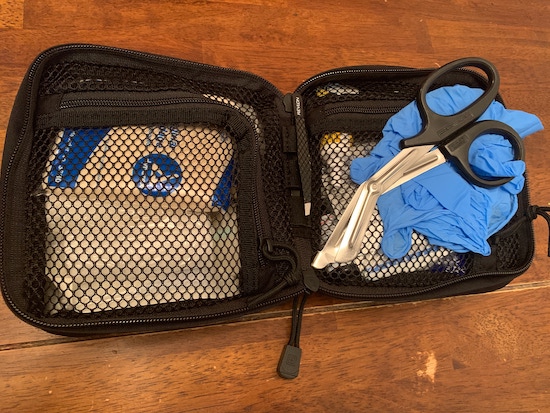
Putting the "Kit" in Kickoff Assistance Kit
Once you've come upward with an idea of what you lot want out of your kit, you should consider what kind of pouch/handbag/box you're going to apply to contain it. There are many items on the market available for this purpose, ranging from small soft-shell zippered cases to larger tackle or tool boxes.
When building offset assistance kits for our family, I decided I wanted something for our cars that would fit nicely in a glovebox or center console. This obviously limited the size that I could work with, and I wanted something durable but not rigid. I looked at several dissimilar offerings from "tactical" equipment companies including five.11 Tactical, Maxpedition, Orca Tactical, Condor, and Magpul (if you lot practise a elementary web search for "medic pouch" you'll find a never-ending list of options to choose from). They all have pouches or cases specifically geared toward creating a "medic pouch" using durable fabrics and a variety of zippered pockets, loops, and Velcro fasteners.
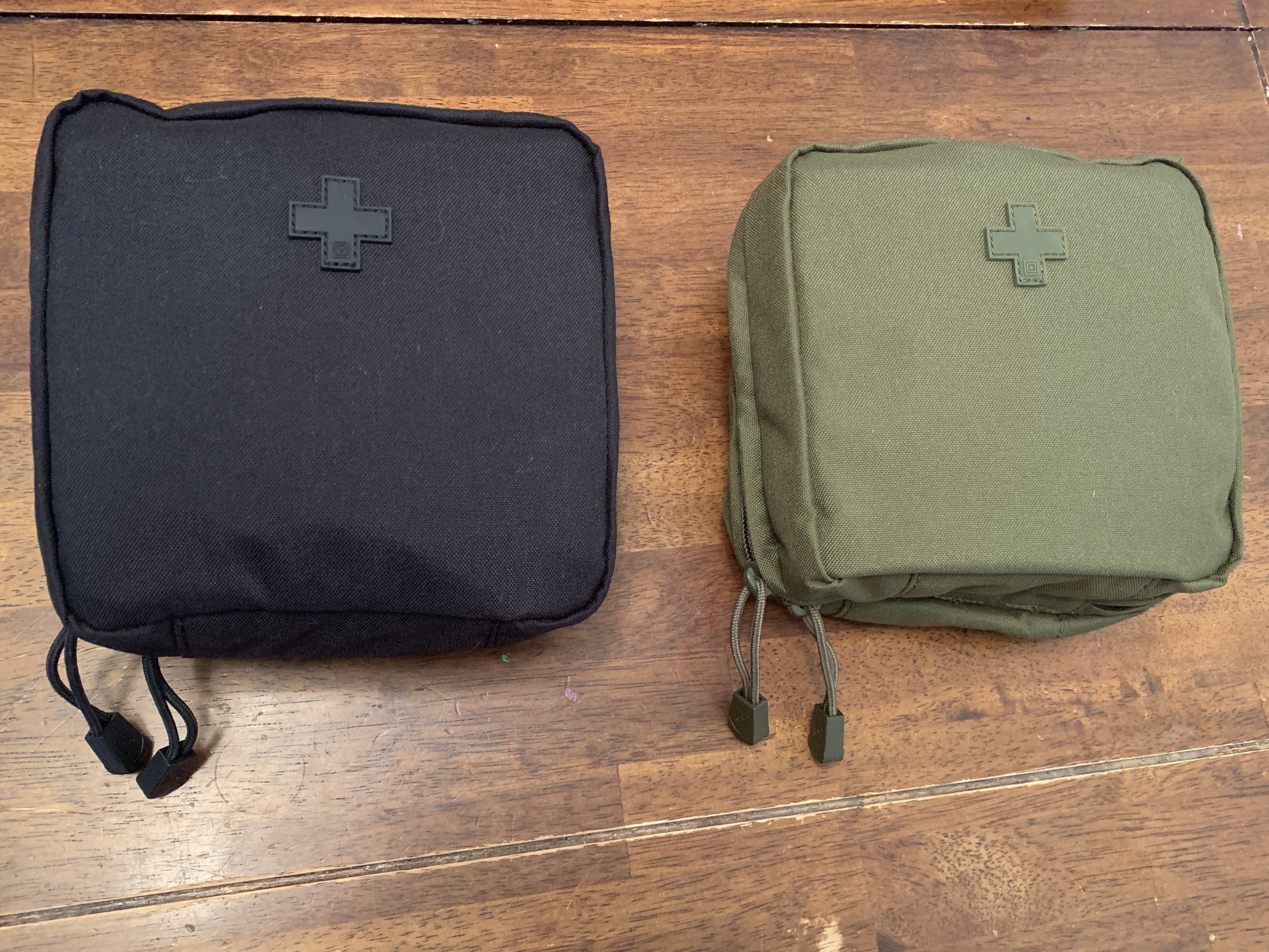
Somewhen I settled on 5.11'south 6×vi Med Pouch which simply includes two zippered pockets which worked great for my purposes. I highly recommend information technology.
In that location are, of course, plenty of other offerings to look at. Galls, a resource for military, law, fire, and EMS gear, has a good diversity of quality medical bags to cull from that work dandy for homemade kits of all sizes ranging from small kits similar mine to larger Ems-type "jump" bags that can fit everything you lot'd ever need (and everything you'll never use).
If you decide to become the tackle or tool box route for your first aid kit, you won't need to worry well-nigh searching for a "first aid" specific box. The Walmart outdoors department or near hardware stores should accept what yous need.
When putting your kit together, consider your organization. It's a good idea to go along things organized and labeled in such a way that everyone could open up it and find what they need, peculiarly if someone is using your own kit to assistance y'all! Organize related items together (Band-Aids, butterfly closures, and antibiotic ointment; 4×4 gauze pads and rolled gauze; triangular bandages with SAM splints, etc.). If y'all have multiple pockets where the contents are obscured, consider labeling them (Bleeding Control, Band-Aids, etc.) so y'all or others spend less time earthworks and more than time helping. System tin be every bit simple as a few zero-loc numberless and/or rubber bands.
Basic First Aid Items
Regardless of the specific purpose of your kit, in that location are a few basic items I believe should be included in near every kit:
- Wound cleaning amanuensis: A small cut can be a big problem if it gets infected. While lather and water is the all-time manner to cleanse wounds and preclude infection, if you lot're using a beginning aid kit for the chore, chances are you're not about a sink. And then something as simple every bit antiseptic wipes for pocket-sized injuries is very important to proceed in your kit. If you're keeping a larger first aid kit, a small bottle of hydrogen peroxide or Hibiclens are great options, also. Isopropyl alcohol or alcohol wipes are okay simply can have a heck of a sting. If you've never experienced this yourself, just trust me. For kids, antiseptic wipes or hydrogen peroxide are all-time.
- Ring-Aids: Obvious choice if you ask me, and peculiarly truthful if you have children. Every parent knows the "healing power" of Band-Aids on small kids. Keep a handful of these in your kit. Bonus points for knuckle and fingertip Ring-Aids. I'd also opt for the fabric Ring-Aids which agree stronger and longer. Consider waterproof equally well depending on your needs.
- Butterfly closures: If you have a cutting (we phone call it a laceration or lac for short) that'southward a scrap deep, you might come across the wound gaping open. Not only does this leave the deeper layers of tissue open to infection only it could make the laceration even worse every bit it pulls. Use butterfly closures to continue the edges together. Then use some gauze and force per unit area to control bleeding while you seek medical care. If yous discover yourself using these, yous may need stitches.
- Antibiotic ointment: This could be individual packets of antibiotic ointment or a tube of Neosporin. Either manner, preventing infection is important.
- Nitrile exam gloves : The main purpose of using gloves when providing first aid is to prevent coming in contact with someone else's blood or other body fluids that tin end up causing harm to you lot. Blood-borne pathogens are a very real and serious risk. You may not be concerned about that when it's your own kid, simply if you're helping someone else, don't let your proficient deed shorten your life expectancy. You never know what people around you are conveying. And let's be honest, getting someone else'southward claret or other fluids on yous is but gross. Additionally, a clean pair of gloves to cover your dirty hands can add together to infection control for your "patient."
- Gauze: Don't promise that y'all have Kleenex or paper towels nearby for bleeding command. You'll need some gauze for that. While yous can detect a diversity of dissimilar types of gauze, the basics are 4×4 gauze pads and rolled gauze. Slap a few 4x4s on height of a bleeding wound, hold pressure, and trounce feet to an ER. Rolled gauze wrapped tight can be used equally a force per unit area dressing or but to secure the gauze. Once yous've put some gauze on and held pressure, don't let go to meet if it'southward still bleeding. Simply go along holding on.
- Triangular bandages: These are 1 of the most universal items in your first aid kit. A couple of these tin can be used for anything from a sling and a swathe to temporarily treat an upper extremity fracture (broken collar bone, cleaved upper or lower arm) to splinting a foot or ankle fracture past tying a pillow tightly around the pes, or even with makeshift rigid splints to tie effectually a cleaved leg. A triangular bandage can also be used just about anywhere as a pressure dressing if you have a bleed that won't terminate. Your first assistance kit should not be without a couple of these.
- Burn treatment: Burns can happen anywhere. From your child touching a hot stove, to removing the radiator cap on an overheating engine, you need to be prepared for a burn down. Treating is basically done by stopping the burn — cool it off somehow — and wrapping the burned surface area with sterile gauze/dressing. For my kit I opted for elementary burn down gel packets that can be placed on a burn before wrapping it. There are also several fancy burn dressings on the market you can take a expect at to discover what suits your needs.
- Over-the-counter (OTC) medication: Consider having a small amount of OTC medication available in your outset aid kit. Ibuprofen (Motrin, Advil) and acetaminophen (Tylenol, Paracetamol) are great for hurting relief and reducing a fever. Ibuprofen also helps reduce inflammation which tin be helpful with some injuries. Diphenhydramine (Benadryl) can be used in case of mild allergic reactions (for severe reactions, Benadryl should still be used, simply it may not exist enough). Aspirin (Bayer) can be kept on manus in the event of a possible heart attack, if that's something you lot want to be prepared for. As I mentioned earlier, this could also include oral glucose and an Epi-Pen (Rx generally required) based on your needs. If you take whatsoever medications, take note of how much you took and when you took them. *A quick annotation about medications: While many OTC medications have keen do good, yous should always talk to your md before using whatever medications that haven't been prescribed to you. This guide does non replace medical communication, I am not your doctor, and you should not have this equally instruction to take any medications. I'd also advise against providing any medication, OTC or otherwise, to anyone outside of you lot or your family. There are a lot of risks involved with doing so. Interactions between these medications and some prescription medications can exist harmful, allergic reactions to OTC medications practise be which can cause further harm (upward to and including death), and taking too much of whatever medicine or taking information technology too frequently presents its own ready of bug. Consult your doctor, read the warning labels, pay attention to and follow the dosing and recommended frequency, and check expiration dates of all medications prior to taking them. The importance of this cannot be overstated.
My First Aid Kit
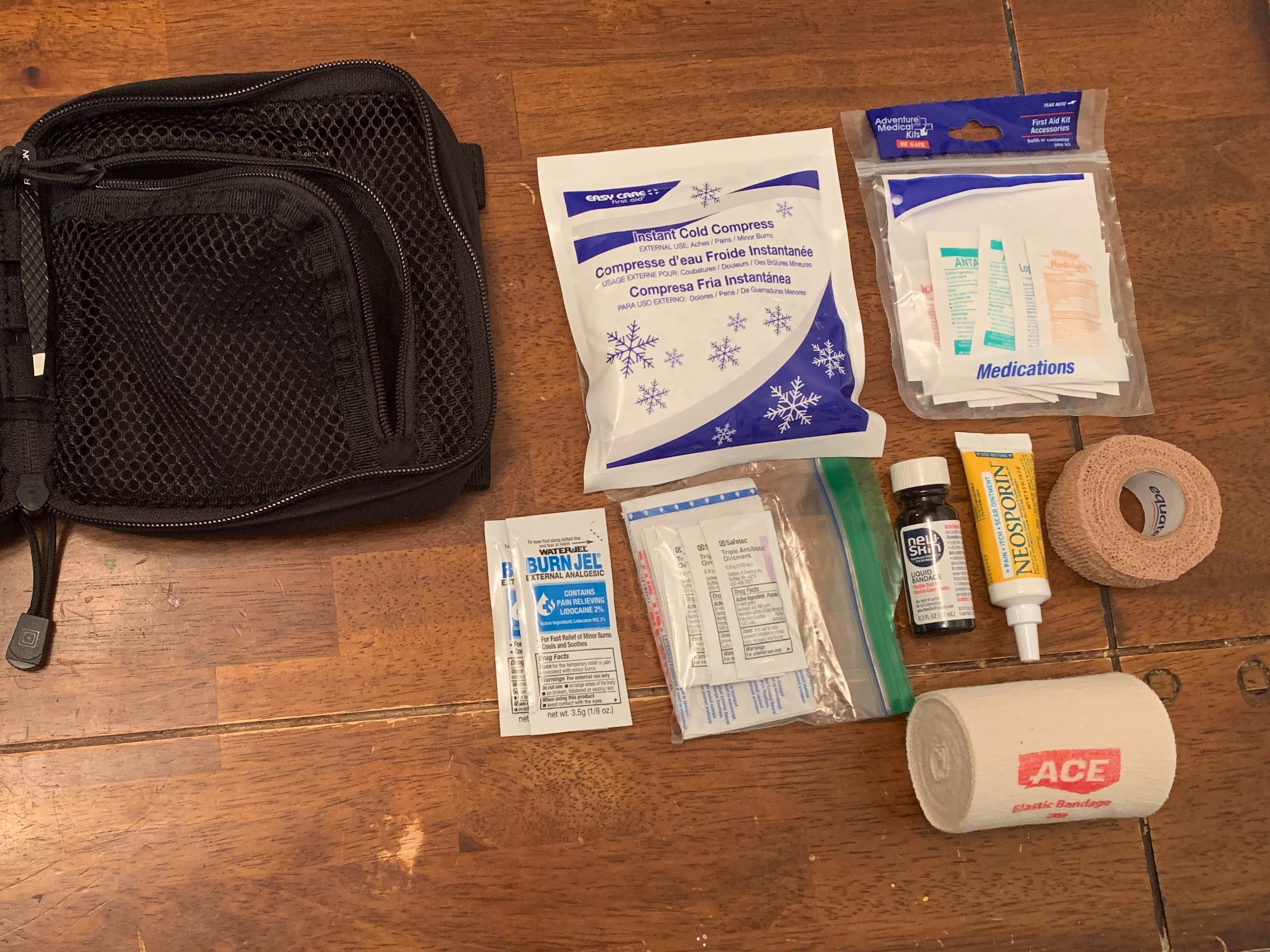
Below you'll find a list of the contents of my first aid kits. If you're not sure where to brainstorm, you can utilise this every bit a starting point. As you put your kit together and use it, don't be afraid to tweak the actual contents and quantity from what yous started with.
Every bit I mentioned earlier, the purpose of my kit is to treat minor problems until I tin get help. It's not a blowout kit or major trauma kit — it's non meant for major injuries or medical problems. It's enough for scrapes and dings, twisted ankles, and other modest injuries.
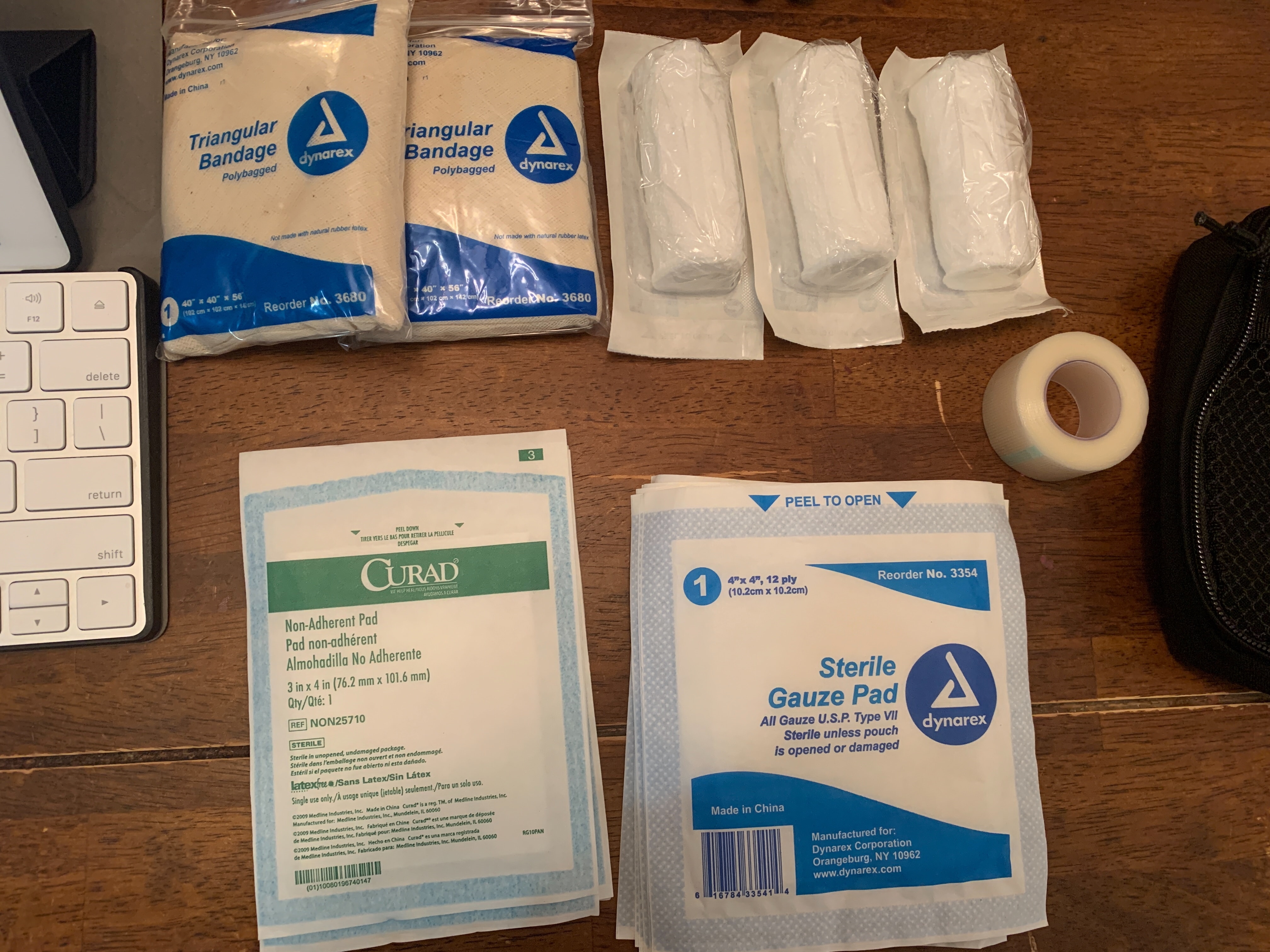
Trauma Pocket
- (6) 4×4 gauze pads (link)
- (4) 3″x4″ nonstick dressings (link)
- (2) triangular bandages (link)
- (3) 3″ rolled gauze (link)
- 1″ surgical record (link)
First Aid Pocket
- (four-half dozen) cloth Band-Aids (link)
- (ii) knuckle Ring-Aids (link)
- (2) fingertip Band-Aids (link)
- (four) butterfly closures (link)
- (five) antibiotic ointment packets (link)
- (4) antiseptic wipes (link)
(Higher up items kept in a carve up snack size zip-loc bag.)
- loperamide HCI 2mg (anti-diarrheal) (link)
- electrolyte tablets (bundle of ii) (link)
- antihistamine (Benadryl) 25mg (link)
- ibuprofen 200mg (2 packages of 2) (link)
- acetaminophen 500mg (package of 2) (link)
- antacid 420mg (package of 2) (link)
(Meds kept in a separate zip-loc bag, purchased equally i pack from REI.)
- 3″ ACE bandage (great for wrapping sprained ankles, securing a splint, or as a pressure dressing) (link)
- one″ Coban (self-adhering rubberband bandage, proficient for buddy taping cleaved fingers/toes and securing bandages and a number of other applications) (link)
- liquid bandage (great for small, hard-to-bandage cuts) (link)
- 5oz tube Neosporin (I employ one that also has an anti-itch property) (link)
- burn gel bundle (link)
- cold compress pack (link)
- tweezer (link)
Boosted Items
- (two) pair of nitrile gloves (link)
- trauma shears (cutting away wearable or cut bandages to size, or annihilation else you might demand pair of scissors for) (link)
Where do you find the items listed above? I'd avoid drugstores/pharmacies considering the products there tin can be junior in quality and overpriced. Galls.com, that I mentioned earlier, is where I purchased most of the supplies for my first assist kits. You tin can relieve coin shopping through there, past buying in bulk, and so making multiple kits, if desired. Many items tin can exist purchased at WalMart, Amazon (see the links higher up), and outdoor stores like REI.
If you're on a tight upkeep, always store around for the all-time deals, merely be wary of inferior products. If you're not sure on quality, try ordering equally minor of an amount as you can and examination it before you purchase in bulk. For other specialty products such every bit tourniquets, Israeli battle dressings, Quick-clot, etc., it pays to do your enquiry and store around. While there are a lot of good products and sellers on the market, in that location is always someone looking to accept reward of the survivalist/preparedness folks. Shop smart.
The Importance of Training
More of import than simply having a first aid kit is training. All the first assist kits in the world won't do yous any skilful if you haven't received any training to treat yourself or others.
While it takes adjacent to no training to rinse off a wound and apply a Ring-Help, a basic understanding of anatomy and different injuries volition brand all the difference in your ability to care for an injury or medical emergency. Y'all don't need to spend thousands of dollars for an EMS cert or bring together the Army as a combat medic. In that location are many training options for the "layperson" or everyday denizen.
Organizations such every bit the American Centre Association and Cerise Cross offer training courses for CPR, AED, and Outset Aid. At that place are also starting time aid courses designed effectually trauma and blood loss prevention that are available for anyone with zero experience and up to seasoned medics. If you lot want to take it a step further, there are also courses that can certify you as a "first responder" or "emergency medical responder" with some states giving a state license/certification equally well. In Texas this is called an Emergency Care Attendant.
If you're unable to discover whatever businesses effectually you or any courses online that meet your needs, consider reaching out to local hospitals and fire or police departments. Many of these organizations offer community outreach programs including CPR and First Assist grooming. If non, they can at to the lowest degree point you in the right management. I've never been to a Fire Section that wasn't willing to reply questions and provide aid to anyone looking for it.
Once y'all have a kit, you need to practice with the items you have (this is some other reason ownership supplies in majority is helpful!). Knowing what to do is worthless if you don't know how to do it. Get out there and practice assessing, bandaging, splinting, etc. If you have a spouse and/or kid that is quondam enough, teach them how to use the contents of your first aid kit. Not merely so they tin help themselves, but and so they can assist you if you end upwardly becoming the patient.
And sorry guys, I'm afraid activeness movies and hospital shows don't count every bit training. Delight don't stab anyone in the throat with a ballpoint pen if they stop animate.
Final Notes
I hope this guide has been helpful in developing your own first aid kit! Every bit I wrap this upwardly, I have just a couple more things for you to consider:
- Know when to telephone call European monetary system or get to a hospital. A showtime assist kit is non definitive intendance. It can exist helpful to temporarily stabilize an injury or affliction, but it is chosen FIRST aid for a reason. Know when yous are out of your depth and when it'southward time to get farther care. There may also exist times where your first aid kit is worthless. Don't waste precious time digging through your kit when y'all should be calling for assist.
- Consider keeping a list of wellness-related information almost yourself or family unit in your kit or wallet. This is especially important if you accept prescription medications regularly, accept any significant medical or surgical history, or any allergies. This list can exist helpful if you are incapacitated and there'due south nobody effectually who knows this information about y'all. Information technology's also helpful if yous take multiple medications that are difficult to remember when you get to the ER. As a paramedic, I ever appreciate when a patient has a list that they can requite me so I can immediately and quickly review pertinent information while caring for them. I'd recommend including the following data:
- Full proper name and date of birth
- Height and weight (weight especially is important as many medications are dosed based on weight)
- Emergency contact data, including relationship (you might consider having multiple emergency contacts; only listing your wife, for example, doesn't assist if you are both incapacitated in a automobile accident)
- Blood blazon
- List of prescription medications, amounts (mg, mcg, etc.), times taken (once a day, twice a day, equally needed, etc.), and reason for taking the medication (pain, diabetes, low); include whatsoever OTC medications yous take regularly (such equally a daily baby aspirin) and supplements/vitamins that y'all accept regularly
- List of all allergies (bee stings, drug allergies, food allergies) and your reactions to those allergens (rash, shortness of jiff, etc.)
- List of all medical weather condition and past medical history (high claret force per unit area, diabetes, previous heart attacks or strokes)
- Listing of previous surgeries or major procedures (such as coronary artery stents) and approximate date (month and year) of those surgeries and procedures. This may seem similar a long list if all of these bullet points use to you, but the data is very helpful to emergency responders and ER staff. You lot can easily print all this out in small-scale enough font that it tin can be folded and placed in your wallet and/or offset aid kit.
- I would caution y'all against carrying or using anything you don't know how to utilize or use properly (unless it really is the apocalypse; then yous do y'all, boo). Remember, there's a big deviation between first aid and avant-garde life back up. Initiating handling exterior the typical first aid scope of a layperson without advisable grooming and certification can cause further injury and death and open up you up to lawsuits. Nobody wants that.
- Lastly, don't limit yourself to just ane first aid kit! Once you've created one, it can be very piece of cake to make a couple more to comprehend all your bases, especially if you lot bought whatever of your supplies in bulk. Having multiple kits in different locations will merely add together to your preparedness and increment your antifragility.
_____________________________________
Charles Patterson is a husband to a beautiful wife and male parent of five wonderful children. Afterward serving as a linguist in the Marine Corps and earning a degree in Music Production afterward belch, Charles found his true passion equally a paramedic. When the piece of work is done and the chores are finished, he enjoys cycling, mountain biking, shooting guns, frisbee golf with his family, and playing guitar.
Previous Next
Source: https://www.artofmanliness.com/health-fitness/health/the-complete-guide-to-making-a-diy-first-aid-kit/

Post a Comment for "what to put in a car first aid kit"